
An independent perspective on cybersecurity, digital transformation and responsible innovation.
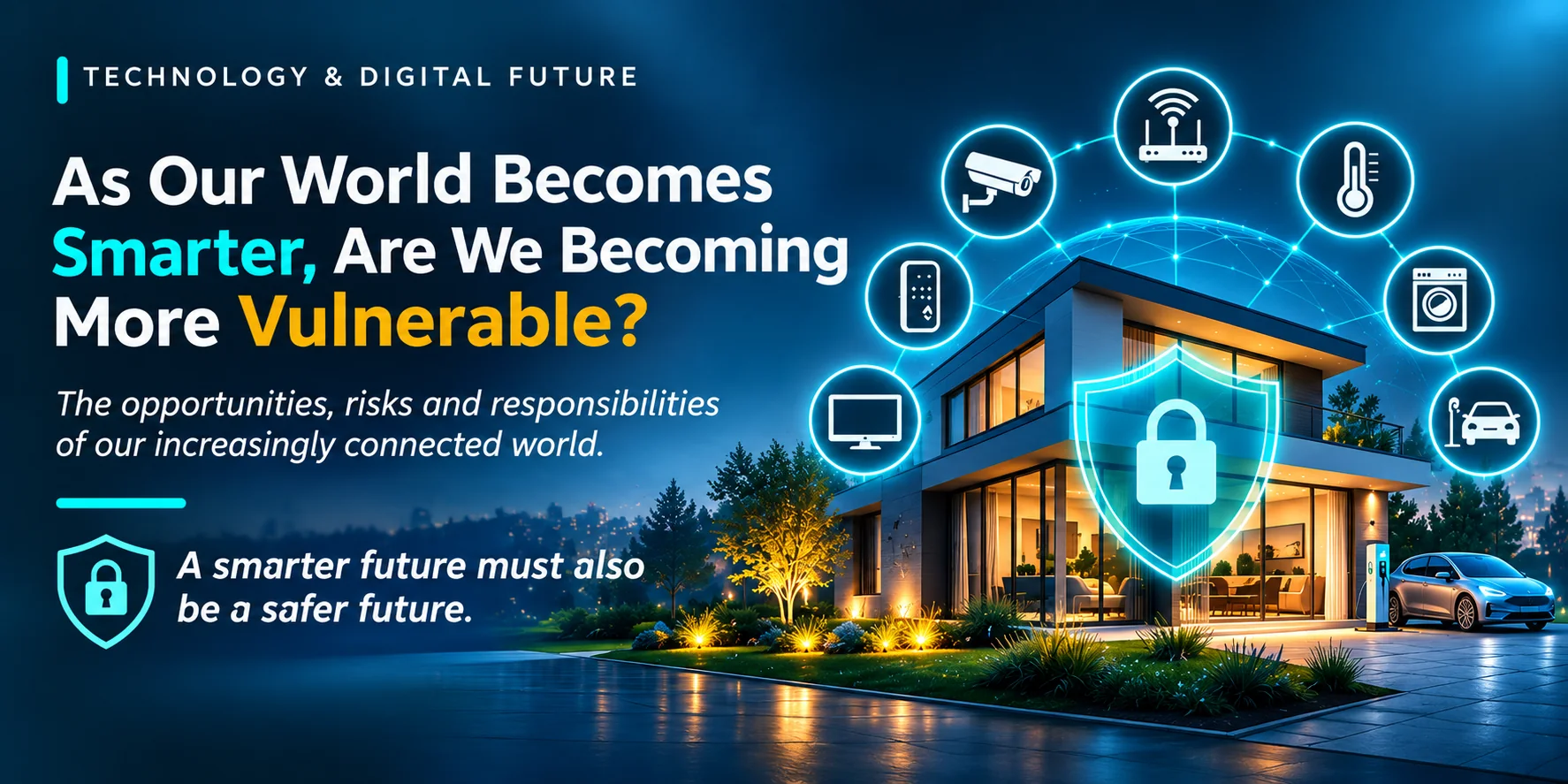
As Our World Becomes Smarter, Are We Becoming More Vulnerable?
Our homes, workplaces, vehicles and essential services are becoming increasingly connected. Technology is transforming how we live, work and communicate.
Smart technology offers enormous benefits: convenience, efficiency, automation, better monitoring and access to services from almost anywhere. But as our dependence on connected technology grows, an important question deserves greater attention: are we securing these systems as quickly as we adopt them?
From my perspective in IT transformation and technology leadership, cybersecurity should not be considered only after something goes wrong. It must be part of how technology is selected, designed, implemented and used.
This article is not intended to create fear or discourage innovation. It is about understanding the risks, asking better questions and taking practical action.
Cybersecurity in Numbers: Understanding the Scale
Data breaches and cyberattacks affect organisations across the world. Official reports help us understand the scale, although no single dataset captures every attempted or successful hack.
Personal-data breaches reported to the Dutch Data Protection Authority.
Reported personal-data breaches associated with cyberattacks.
Cyber incidents analysed across the EU reporting landscape.
Studied breaches starting with exploitation of software vulnerabilities.
Sources: Autoriteit Persoonsgegevens, ENISA Threat Landscape 2025 and Verizon DBIR 2026. These figures describe different datasets and must not be added together.
Reported Data Breaches in the Netherlands
Approximately 4.1% more reports in 2025. These totals include accidental disclosures, not only malicious hacking.
Cyberattack-Related Breach Reports
Approximately 58% higher than the adjusted 2024 comparison. The adjustment excludes notifications from one exceptional supplier incident in 2024.
How Can a Hacker Reach Your Home or Business?
Consider a CCTV camera connected to your smartphone. You may be able to view it while travelling abroad, even though the camera remains at home.
This convenience is possible because the camera communicates through a network, application or cloud service. The same technology requires proper security to prevent unauthorised access.
How a Connected Device Could Be Compromised
A simplified illustration of one possible cyberattack pathway.
Important: A device connected to Wi-Fi is not automatically accessible from the public internet. An attacker needs a vulnerability, compromised credentials or another unauthorised access route.
Five Common Ways Security Can Fail
Weak or Reused Passwords
Stolen credentials may allow criminals to access device-management accounts.
Outdated Software
Security weaknesses can remain open when software and firmware are not updated.
Phishing and Impersonation
Fake messages may trick users into revealing credentials or approving logins.
Insecure Remote Access
Unnecessary internet exposure or poor configuration may create entry points.
Compromised Service Providers
An attack against a cloud platform or supplier may affect connected customers.
What Can Be Affected Beyond Computers?
Cybersecurity is no longer only about laptops, email accounts and smartphones. Connected equipment increasingly interacts with our physical surroundings.
Smart Door Locks and Alarms
A compromised control system could potentially alter access permissions, interfere with alerts or disrupt entry.
CCTV Cameras and Baby Monitors
Unauthorised access could expose private video, recordings or household routines.
Heating, Cooling and Refrigeration
Altered settings or interrupted operation could affect comfort, food storage and business activities.
Smart TVs and Appliances
Poorly secured devices or accounts may expose usage data, personal information or connected functions.
Connected Cars and EV Chargers
Compromised services could expose information or disrupt connected features, depending on system design.
Businesses and Infrastructure
Connected industrial, retail, healthcare and logistics systems may experience operational disruption after a compromise.
What Could the Next Decade Bring?
Artificial intelligence, automation, smart buildings and connected infrastructure will continue to transform society. These developments offer significant benefits, but cybersecurity must evolve alongside them.
AI-Assisted Scams
Convincing fake voices, messages and videos could make impersonation and social engineering more difficult to recognise.
Interconnected Dependencies
One compromised supplier or cloud service could potentially affect thousands of connected customers.
Physical-World Consequences
When digital controls manage physical equipment, cybersecurity weaknesses can also become operational safety risks.
Greater Privacy Exposure
More connected sensors and services may collect information about our locations, habits and everyday lives.
These are possible future risks, not predictions that every connected device will be compromised.
Five Steps Towards a Safer Connected Life
Cybersecurity does not always require expensive technology. Simple habits can significantly reduce avoidable risks.
Replace default passwords and use different credentials for routers, cameras, locks and cloud accounts.
Enable automatic security updates where available. Replace unsupported equipment when necessary.
Protect important accounts with an additional verification step, especially those controlling devices.
Update router software, use modern encryption and consider separating smart devices from other equipment.
Remove unused accounts, disable unnecessary remote access and regularly check connected devices.
Technology Is Not the Enemy.
Unprotected Technology Is the Risk.
Innovation and cybersecurity must move forward together.
Think smart. Connect safely. Build a safer digital future.

Sources and Further Reading
The figures in this article come from published cybersecurity reports. Different reporting systems measure different types of incidents.
- Autoriteit Persoonsgegevens — Dutch personal-data breach reporting.
- ENISA Threat Landscape 2025 — European cybersecurity incident analysis.
- ENISA Threat Landscape — European cyber-threat trends.
- Verizon Data Breach Investigations Report — International data-breach analysis.
- Dutch National Cyber Security Centre — Cybersecurity guidance and awareness.
Published November 2026. This article provides general cybersecurity awareness information, not a security assessment of any particular product or system.